

Most corporate events begin with logistics. A date, a venue, a headcount, a budget, a run of show, and execution of those things are typically the experience created. These things matter, and they have to be handled well. But they are not where a meaningful event begins. They are what you figure out after you have answered a harder and more important question: what is this gathering actually for, and what should be different about the people in the room because it happened?
That question is the whole of experience design. Everything else, the décor, the food, the program, the flow, is in service of the answer. When the answer is clear, every decision has something to measure itself against. When it is missing, an event becomes a well-run collection of nice things that adds up to a pleasant afternoon, but misses the opportunity for something else.
Purpose is the design brief
The most common mistake in corporate events is treating the occasion as the purpose. A company anniversary, a product launch, a donor luncheon, an appreciation dinner, these are occasions, not purposes. The purpose is what you want the occasion to do: to make people feel genuinely valued, to mark a milestone in a way that people carry forward, to move supporters to give, to make a team feel like a team. The occasion is the container. The purpose is what goes in it.
An experience designer starts there, and works backward. That is a different discipline from event planning, which starts with the container and fills it competently. Both require flawless logistics. Only one begins by asking what the gathering is meant to accomplish and designs every element to accomplish it.
What this looks like: designing around a single true detail
Purpose-driven design is easier to understand as an experience than it is to describe, but I’ll attempt to describe an example.
Gather by Autry was brought in to design a milestone anniversary of a concert fundraiser, an event that benefits healthcare patients and their families. That year carried unusual weight, because the man who started the event, as its first chair, had passed away. The gathering had to do several things at once, and they were in tension. It had to honor his life and everything he had put into motion. It had to stay focused on the mission he cared about, the patients the fundraiser serves. And it had to look forward, toward the next twenty years of the event.
Honoring a person while looking ahead is a genuinely difficult experience design problem. Lean too far into grief and the evening becomes a memorial that loses the mission and the future. Move too quickly past the loss and it feels cold. The design had to hold both.
So the work began not with décor or agenda planning, but with listening. Interviews with many of the people who had known him and built the event alongside him highlighted several things about his character: that he was a remarkable leader, that he made people feel honored and witnessed, and that he was devoted to the mission. The speakers at the event would carry those truths well. But one small, personal detail came up repeatedly that made him memorable: he was a recognizably sharp dresser, and many mentioned his collection of colorful ties.
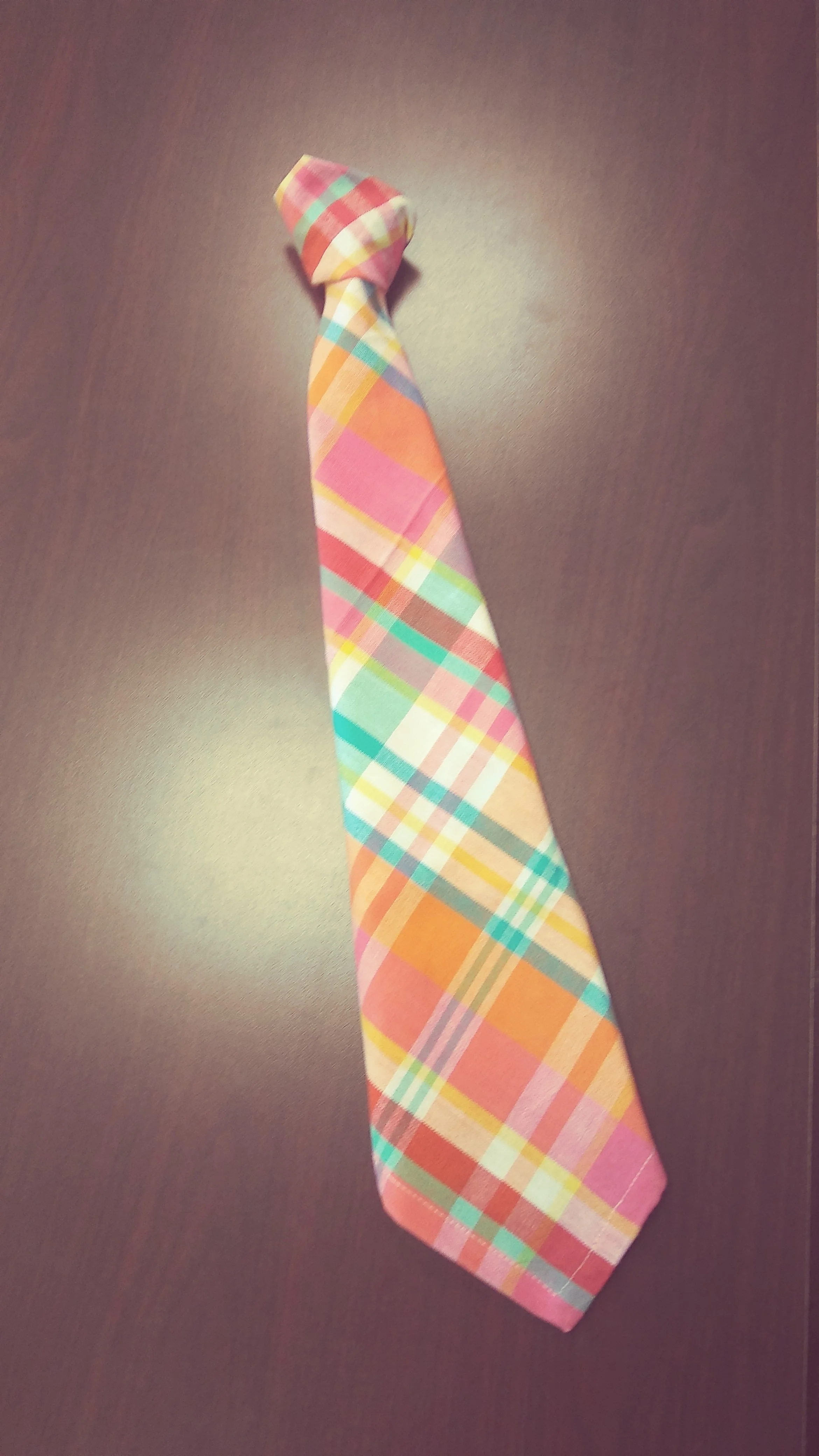
Custom necktie napkin fold creates a detail that moves guests emotionally in service of the event’s purpose.
That detail became the symbol that could bring him into the room. At each of the four hundred place settings, the napkins were folded and tied into neckties, a familiar reminder of the man himself, something people would fondly recognize without explanation. It let the room hold his memory warmly while the program did the work of honoring his character and turning toward the mission and the future. It was subtle enough to leave room for everything else the evening needed to be. More importantly, it was warm enough to remind each person of a man who made everyone feel seen. And it was there with each of them at their seat.
The measure of whether a design detail works is what it does to the people in the room. The event broke fundraising records. The supporters were looking ahead to the next 20 years of the event. And his daughter was moved enough by it that she asked to take a set of the napkins home, a memento of the evening that had honored her father's life and contribution.
That is the difference a single, purpose-driven detail can make. It was not chosen because it was pretty, although the mixed plaid patterns of the napkins themselves were gorgeous. It was chosen because it did something the speeches could not, and because it served the purposes the gathering had to fulfill. Guests left being reminded and inspired by a man worth honoring, and with a call to action to carry his work forward into the future.
Why this matters for a company
For a corporation, an institution, or a nonprofit, events are rare and expensive opportunities to gather together the people who matter: employees, donors, customers, partners, paying attention and open to feeling something. That is a valuable position, and most of the time it is spent on a nice evening rather than a designed one.
An event designed around its purpose does more than run smoothly. It makes people feel the thing you intended them to feel, and it sends them back into the world carrying it. A milestone becomes memorable and inspiring. A team feels valued rather than merely thanked. A mission becomes something people are moved to support rather than politely reminded of. The logistics are the starting line. The purpose, and the design that serves it, are what determine whether the event moves people into intentional experiences.
Start somewhere other than the checklist. Start with what the gathering is for, and who the people in the room should be when they leave.
If you want your organization's next event to accomplish something, not simply happen, that is the work Gather by Autry designs, events that accomplish something. Reach out anytime to talk about what your gathering is really for.
